How to Ask for Help in Nursing School
Nursing school has a way of humbling even the most capable students. You walk in thinking you’ll be fine because you’ve always been the one others leaned on, and within a few weeks you’re staring at a care plan at two in the morning, wondering how everyone else seems to be keeping up. The truth is, they aren’t. They’re just better at asking for help, or they’ve learned the hard way that pride has no place in a profession built on teamwork.
Why Pride Shows Up in Nursing School
Many nursing students arrive with a quiet belief that struggling means they don’t belong. You passed your prerequisites and earned your seat. Asking for help can feel like admitting you were a mistake. That belief grows louder when you’re surrounded by classmates who seem to have it together, even though most of them are quietly drowning too.
There’s also the caregiver identity to contend with. Nurses help people. That’s the whole point. So when you’re the one who needs help, it can feel like you’re playing the wrong role. But here’s a reframe worth holding onto: learning to receive care is part of learning to give it well. A nurse who has never needed help will struggle to recognize when a patient is too proud to ask for it.
Where the Help Actually Lives
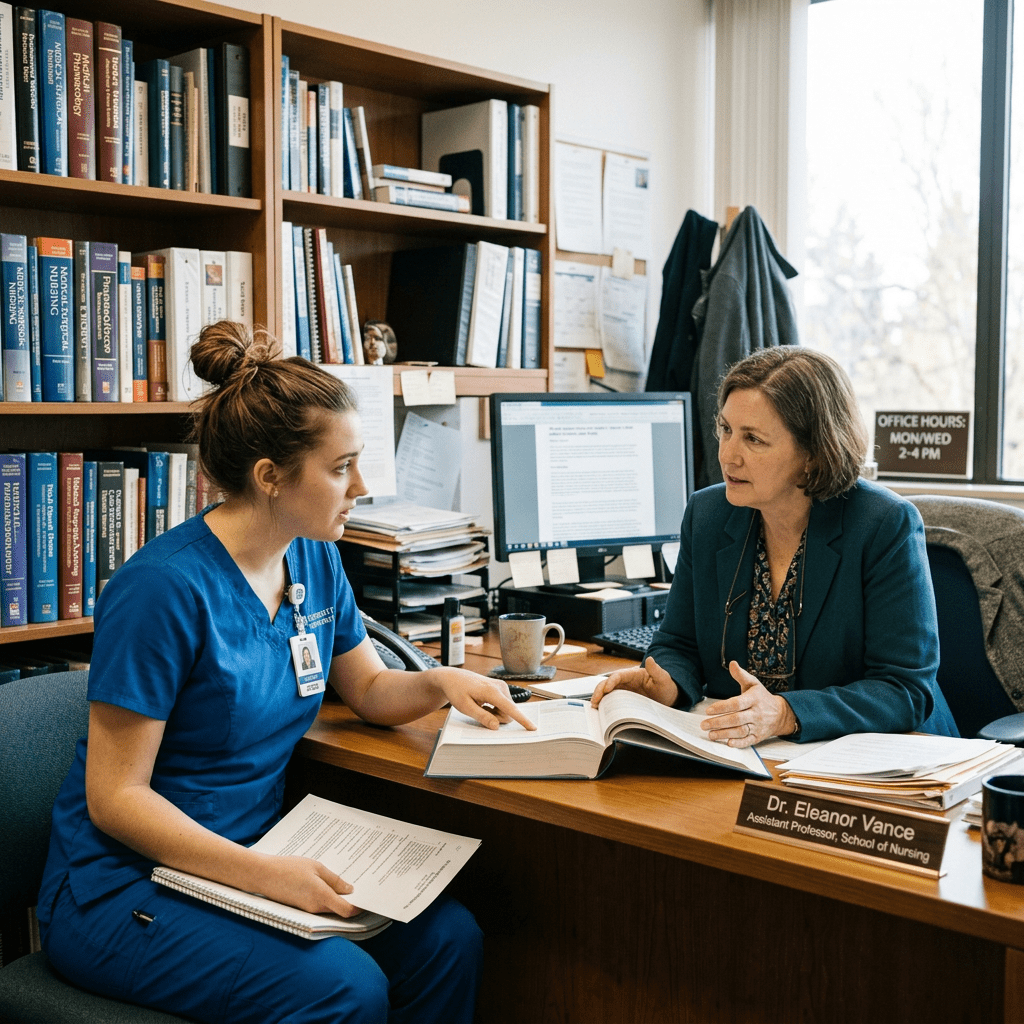
Your instructors want you to come to office hours. They schedule those hours hoping someone will show up. Bring a specific question rather than a vague “I’m lost,” and you’ll leave with something useful. Tutoring centers, whether through your school or peer-led, are another resource most students underuse until finals week, when every slot is gone.
Your classmates are a gold mine. Study groups work best when they’re small, consistent, and focused. A group of four meeting twice a week will outperform a twenty-person group chat every time. Clinical instructors and floor nurses also have knowledge you simply cannot get from a textbook, and most genuinely enjoy teaching students who ask thoughtful questions.
Don’t forget the quieter resources either. Counseling services, academic advisors, disability services if you need accommodations, and financial aid officers exist because students need them. Using them is not a weakness. It’s a strategy.
How to Actually Ask
Be specific. “I’m struggling with pharmacology” is harder to help with than “I keep mixing up beta blockers and calcium channel blockers and I’m not sure how to study the mechanisms.” Specificity gives the person you’re asking something to grab onto.
Ask early. The help you need in week three is smaller than the help you need in week ten, after three failed exams. Reaching out when the problem is still manageable saves you from having to claw your way out of a hole.
Say thank you and follow through. When someone gives you their time, respect it by showing up prepared, applying what they taught you, and letting them know it helped. This is how you build the kind of network that carries you through school and into your career.
The Bigger Picture
Nursing is not a solo profession. You will spend your entire career consulting colleagues, calling providers, asking pharmacists to double-check a dose, and relying on techs and aides who know what you don’t. The student who learns to ask for help is practicing the exact skill that keeps patients safe on the floor. The one who refuses to ask is not stronger. They’re just rehearsing a habit that will cost them later.
Put your pride down. Pick up your phone, your pen, or your courage, and ask. You are not meant to do this alone, and the people around you are waiting for the chance to say yes.


Leave a comment