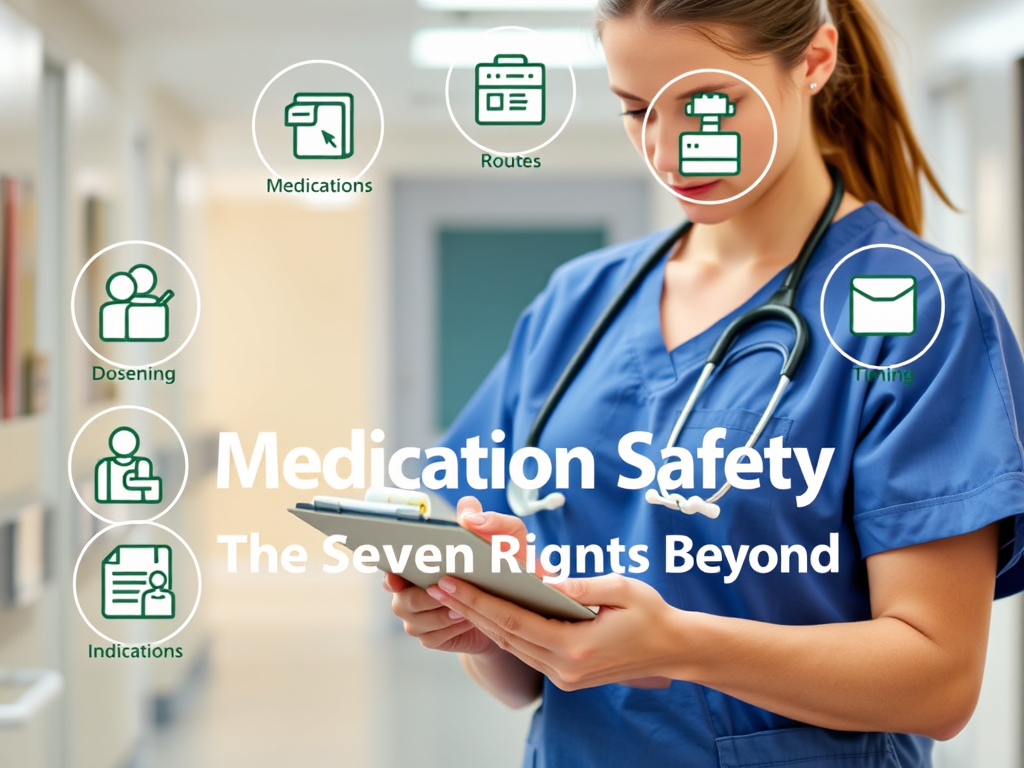
Safe Medication Administration Saves Lives
Medication errors are preventable. As a nursing student, developing safe habits now will protect your patients throughout your career.
The Seven Rights:
- Right Patient: Use two identifiers (name and date of birth). Never assume.
- Right Medication: Check the order, check the label, check again before administering.
- Right Dose: Calculate carefully. When in doubt, have someone double-check your math.
- Right Route: PO, IV, IM, SubQ—wrong route can be fatal.
- Right Time: Timing matters for efficacy and avoiding interactions.
- Right Documentation: If it’s not documented, it didn’t happen.
- Right Indication: Ensure the medication is related to the patient’s diagnosis
Additional Safety Checks:
- Right Reason: Understand why the patient is receiving this medication
- Right to Refuse: Patients can decline. Document and notify provider. Provide patient education on the benefits of the medication; however, do not threaten or coerce the patient to take it. Sometimes, when they learn the benefits of the medication, they make informed decisions to take the medication,
- Right Assessment: Check vitals, allergies, and contraindications before giving meds
High-Alert Medications (Extra Caution Required): Insulin, heparin, warfarin, opioids, potassium, sedatives. Verify doses and have another nurse verify them in accordance with facility policies.
Before Administering ANY Medication, Ask Yourself:
- What is this medication for?
- What are the expected effects and side effects?
- What assessments do I need to complete first?
- What patient education should I provide?
Don’t administer medications you don’t know. Learn about the medication before administering it.
Never Rush: Most errors occur when nurses are rushed or distracted. If you feel pressured, slow down. Patient safety trumps speed.
Speak Up: If something doesn’t seem right, question it. You’re the last line of defense against patient harm from a medication error.
 My NCLEX Story
Leave a comment